What Happens During an Epoxy Floor Installation
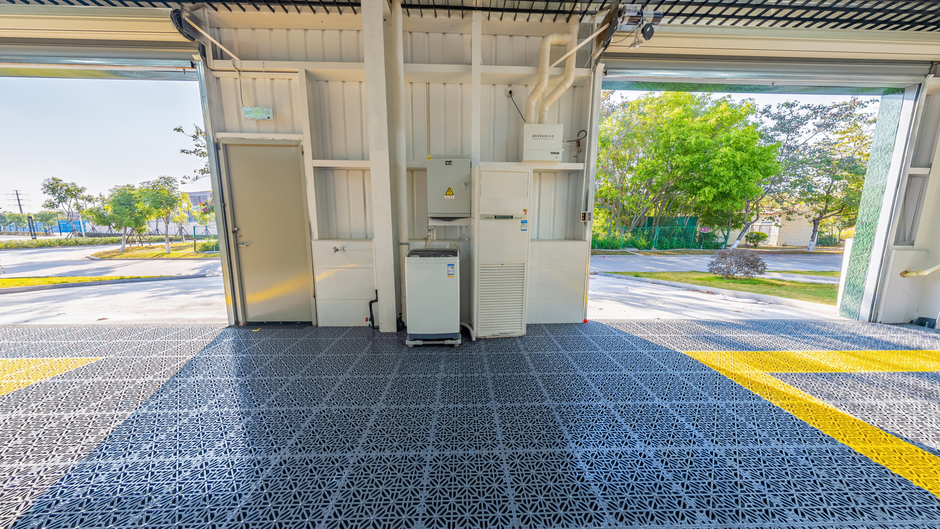
Most people judge a garage floor by how it looks the morning after the last coat and never check the recoat window or the cure time. Slabs in Riverside, CA tend to get finished in a hurry, and epoxy floor coating riverside evrnyc sets the order of work out step by step, because the sequence decides whether the coating holds or peels. A typical system runs from grinding to repairs, base coat, flake if used, scraping, then topcoats.
Grinding and repairs
Diamond grinding opens the surface of the concrete so the primer or base coat can grip. Grinding also exposes cracks, spalls and worn joint edges, and those get filled with a repair material before any coating goes down. Skipping the repairs lets the damage show through the finish. The dust is vacuumed off, not swept, because fine dust left behind weakens the bond.
Base coat and wet thickness
The base coat is rolled or squeegeed to a target wet thickness, measured in mils with a wet film gauge. That number sets the final film build, so spreading a kit thin to stretch it leaves a weak floor. A solid color base suits plain floors. Metallic pigment is mixed into the epoxy and worked by hand while the material is still wet.
Flake broadcast and scraping
Where flake is used, vinyl flake is broadcast by hand into the wet base coat until the surface is covered. Quartz sand can be broadcast the same way when texture is wanted. After the base coat cures, the excess flake is swept and scraped off, and the loose pieces are picked up before any topcoat is applied. Leftover flakes under a topcoat show up as rough spots.
Topcoats and the recoat window
One or more topcoats follow. A clear coat of polyaspartic, polyurea or urethane over the epoxy adds wear resistance and sets the sheen. Each coat has to go on inside the recoat window printed on the data sheet. Miss it, and the surface may need sanding so the next coat bonds. One coat of epoxy alone is not a complete floor system. Heat and santa ana winds across the Inland Empire shorten working time, so material is mixed in small batches and rolled right away.
Cove edges and cure time
Many installers roll the coating up the wall a few inches. This is called a cove or stem wall coat, and it makes the edge easier to clean. Foot traffic is usually allowed sooner than vehicle traffic, and epoxy generally needs several days before a car is parked on it. Full chemical resistance often takes about a week, so solvent and brake fluid spills are avoided early. A floor that feels dry is not fully cured, and tires parked on it too soon can lift or mark the surface.